
For every
version of you.
Three intimate books following one woman through friendship, love, uncertainty, ambition, change and the slow process of becoming herself.
15–20 · 20–30 · 30–40

You were never just one version of yourself.
There was the girl who desperately wanted to belong.
The woman who thought she needed to have everything figured out.
And the version who eventually realised that life was never supposed to follow one perfect timeline.
The Margot Collection is about all of them.
One woman. Every version of herself.
15–20
Almost Grown
First friendships.First love.First heartbreak.First big decisions.And the strange feeling of becoming someone before you even know who you want to be.
20–30
Becoming
Work.Independence.Relationships.Starting over.Watching everyone else move forward while quietly wondering if you’re falling behind.
30–40
Coming Home to Myself
Different priorities.More honest relationships.Stronger boundaries.A quieter life.And the realisation that peace can feel more exciting than approval.
Different chapters.
Same woman.
Three decades of becoming

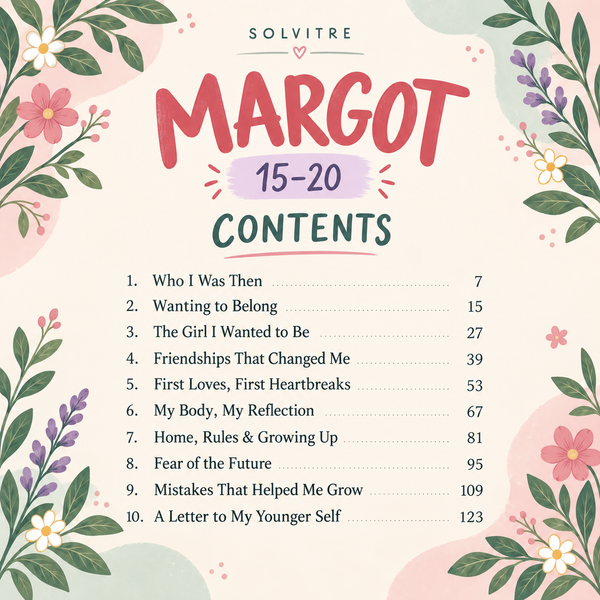
Contents
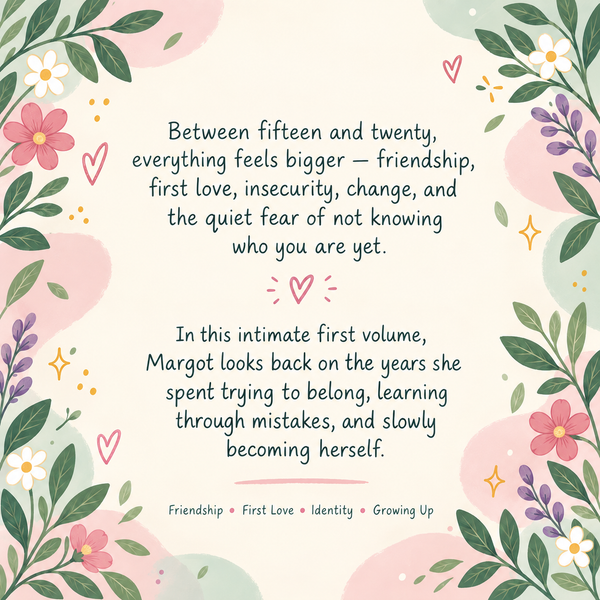
Back cover
Margot 15–20Almost Grown
The Years I Was Trying to Find Myself
Growing up can feel like living everything for the first time — friendship, love, insecurity, heartbreak, comparison and the fear of not knowing who you are yet. In Almost Grown, Margot looks back on the years between fifteen and twenty: the friendships she thought would last forever, the first people she loved, the pressure to belong and the quiet moments that slowly shaped the woman she would become.
For the girl who was trying to become herself before she even knew who that was.
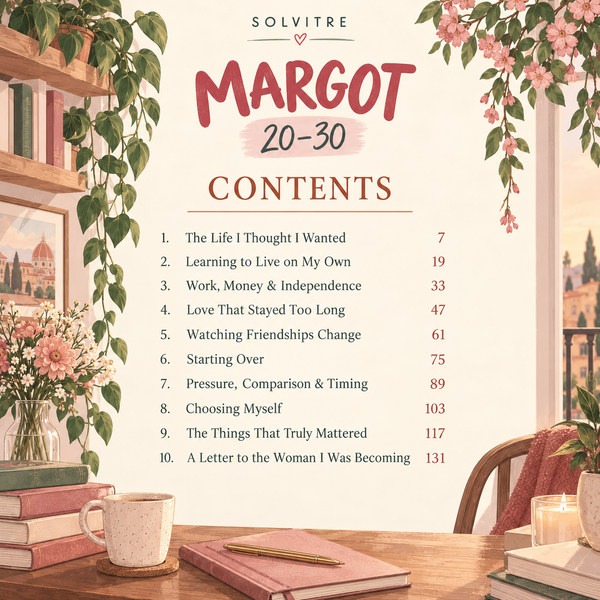
Contents
Back cover
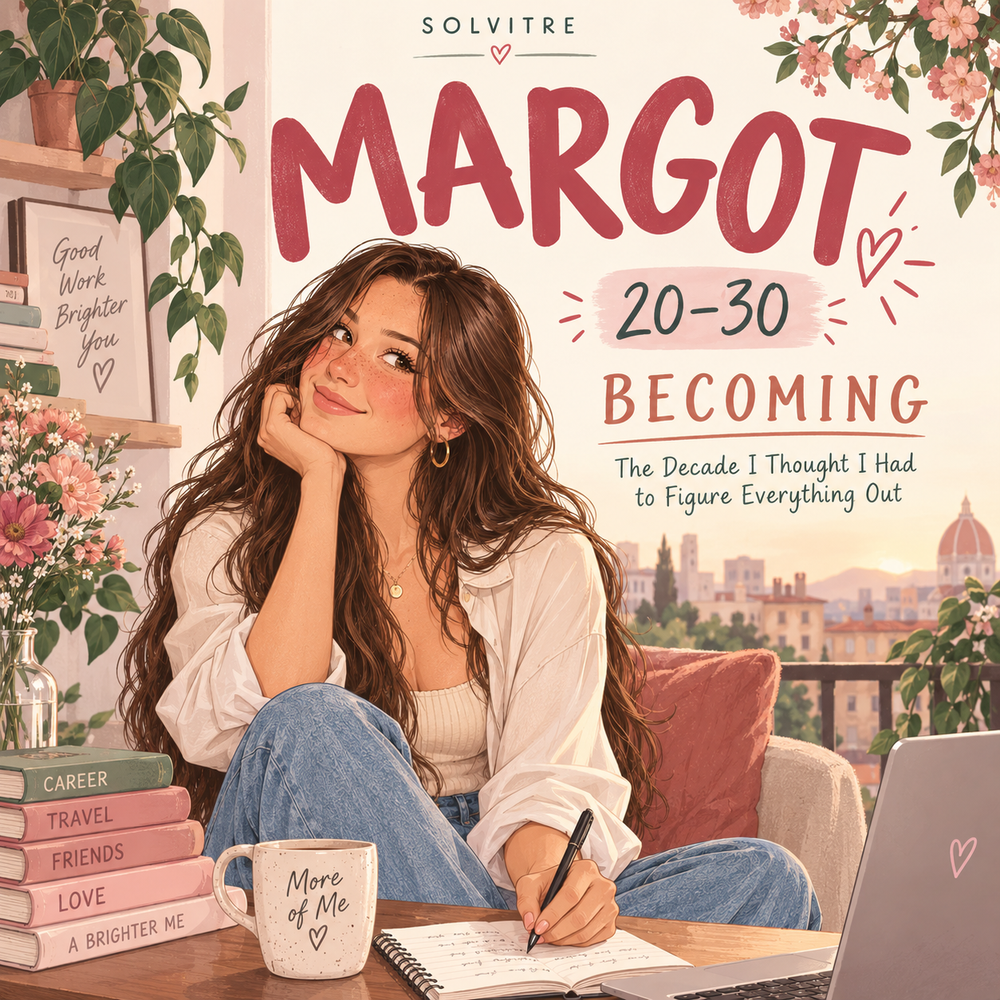
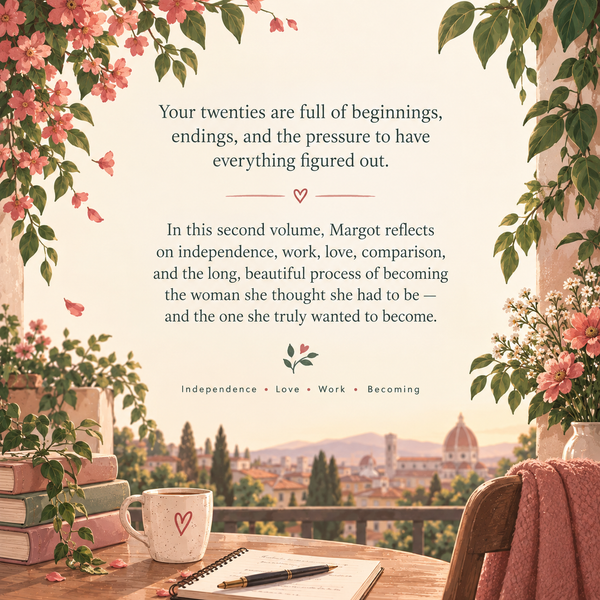
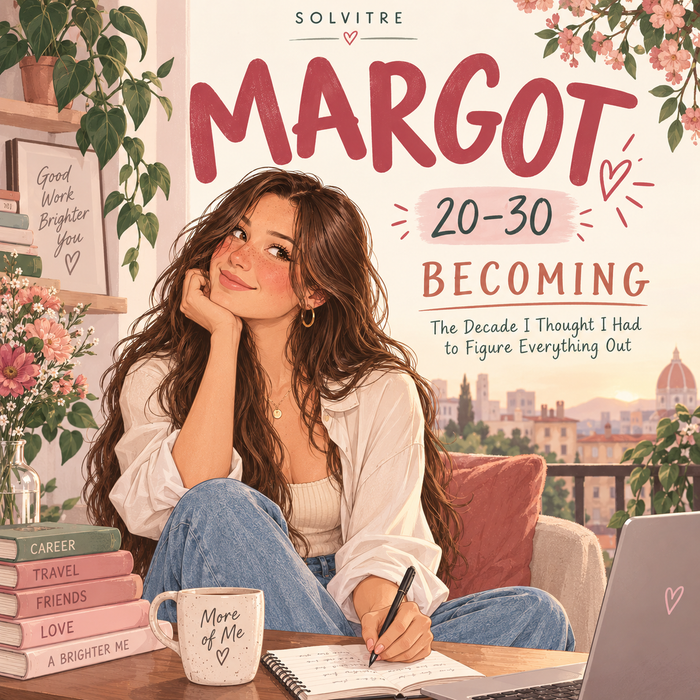
Margot 20–30Becoming
The Decade I Thought I Had to Figure Everything Out
Your twenties are supposed to be exciting. But they can also be confusing, lonely and full of questions nobody prepared you for. In Becoming, Margot writes about independence, work, money, changing friendships, complicated love, starting over and watching everyone around her seem to move through life at a different speed.
For the years when everyone seemed to be moving forward at a different speed.

Contents
Back cover
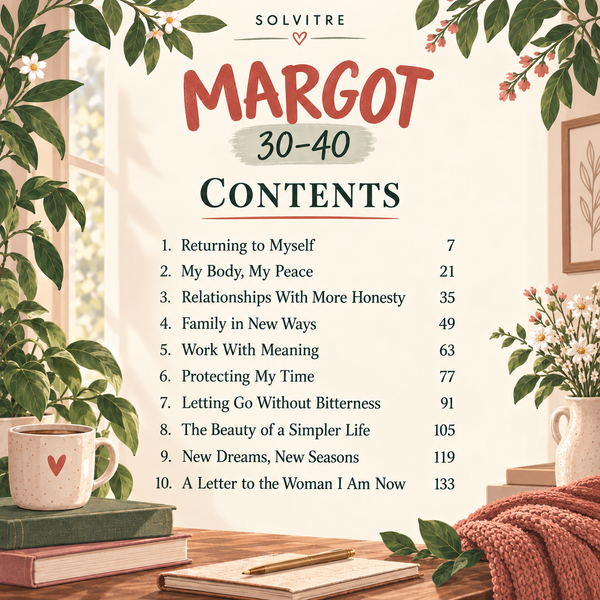
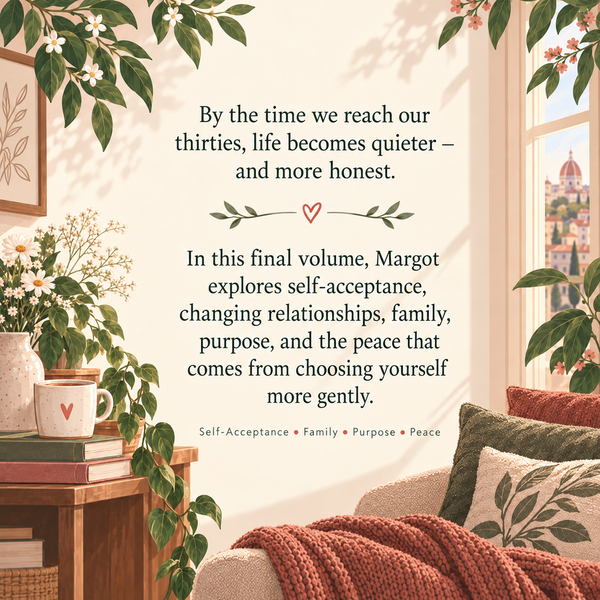
Margot 30–40Coming Home to Myself
The Decade I Stopped Trying to Be Everyone Else
Somewhere in your thirties, life can begin to feel different. The noise gets quieter. Priorities shift. In Coming Home to Myself, Margot reflects on self-acceptance, love, family, changing friendships, work, her body and the freedom that came from needing less approval from everyone around her.
For the years when becoming yourself starts to feel more important than impressing everyone else.
Not a guide.A life being remembered.
The Margot books don’t tell you how you should live. Each chapter begins with memories, moments and thoughts from a different stage of Margot’s life.
- Friendships
- First love
- Loneliness
- Work
- Family
- Comparison
- Changing bodies
- Changing dreams
- Changing priorities
The ordinary moments that become important years later.
Like reading someone’s journal.
“I knew it was over months before I was brave enough to leave.”
“I thought everyone else had a plan. Most of us were improvising.”
“I miss parts of my twenties. I don’t want my twenties back.”
“I wish I could tell the girl I was at seventeen that nobody was examining her as closely as she was examining herself.”
Three decades.One woman.Every version of herself.
From fifteen to forty, follow Margot through friendship, first love, heartbreak, ambition, comparison, changing relationships and the slow process of becoming herself. Three intimate volumes about the things we feel as we grow — and the versions of ourselves we leave behind along the way.


Which version feels most like you?
I’m Margot.
And, for a long time, I thought growing up meant eventually having everything figured out.
At eighteen, I worried about fitting in, first loves, friendships, my body and the future.
In my twenties, I thought everyone else had a plan. I watched friendships change, stayed in places and relationships longer than I should have, started over more than once and slowly learned that becoming an adult doesn’t happen all at once.
And somewhere in my thirties, things became quieter. Not perfect. Just clearer. I stopped measuring my life against everyone else’s timeline. I became more protective of my time, more accepting of the person in the mirror and more interested in building a life that actually felt like mine.
I started writing because there were so many feelings I remembered having but rarely heard people talk about honestly.
The friendship you thought would last forever.
The relationship you knew wasn’t right but weren’t ready to leave.
Watching people around you get married, have children, change careers or move away — and wondering whether you were falling behind.
Looking at your parents one day and suddenly realising they were getting older.
Missing an old version of yourself while knowing you would never truly want to become her again.
Those are the stories behind Margot. Not advice from someone who has all the answers. Just one woman looking back at the different versions of herself — what she loved, what she lost, what she misunderstood and what she eventually learned.
“I’m not writing to tell you how to live your life. I’m writing so you know you weren’t the only one who felt this way.”
Stories for every version of you.
Solvitre was created as a home for stories about becoming.
Because we are never only one version of ourselves.
We change. We fall in love. We lose people.
We question everything. We begin again.
And sometimes, years later, we finally understand the woman we used to be.
Margot is only the beginning. Solvitre exists to tell stories about the moments that quietly shape who we become.
Solvitre is for every version of you.
A few things you may be wondering
What are the Margot books?
The Margot Collection is a three-volume series of personal, reflective writing following Margot through different stages of her life.
Is this self-help?
Not in the traditional sense. The books are not written as instructions for how you should live. They are personal stories and reflections, written to make you feel understood and less alone in experiences that are often difficult to put into words.
Do I need to read all three books?
No. Each volume can be read on its own. You can choose the stage that feels closest to where you are now. Reading all three gives you the complete journey.
Are the books fiction?
Margot is the narrative voice and central character of the collection.
What format are the books?
They are digital books. Nothing physical is shipped.
Can I read them on my phone or tablet?
Yes. They are designed for common digital devices.
When will I receive them?
Your digital access is provided after purchase, following the delivery settings of the store.
Maybe you don’t need advice.
Maybe you just need to know someone else felt it too.
Friendship. Love. Loss.
Ambition. Comparison. Beginning again.
Whatever chapter you’re living, you’re probably not the first woman to feel this way.
Solvitre — for every version of you